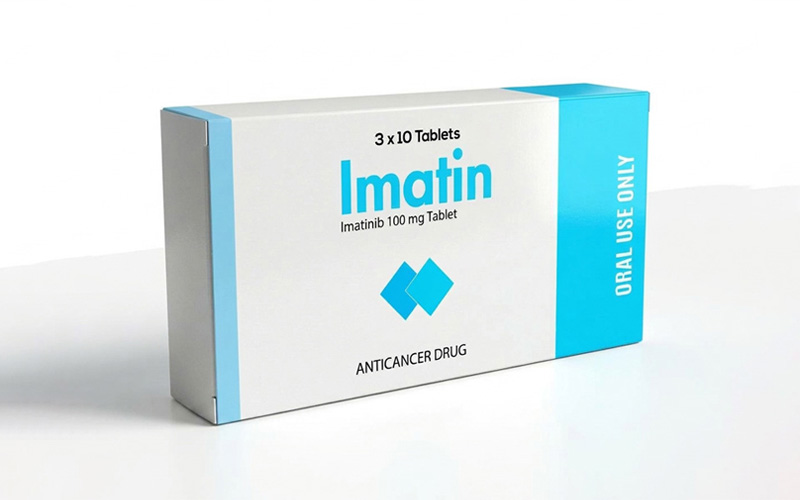
Imatinib, original brand name: Glivec, development code: STI571. It is the world's first small-molecule targeted drug developed and produced by Novartis of Switzerland. As a first-generation tyrosine kinase inhibitor (TKI), it has shown remarkable clinical efficacy and pioneered the era of targeted cancer therapy. It mainly works by inhibiting the activity of tyrosine kinases such as BCR-ABL, c-KIT, and PDGFR, thereby blocking tumor cell proliferation signals. It is primarily used to treat chronic myeloid leukemia (CML), gastrointestinal stromal tumors (GIST), and other diseases. Imatinib was first approved by the U.S. FDA in 2001 and officially approved for import by the Chinese drug administration in 2002.
The launch of Imatinib has completely transformed the treatment landscape for chronic myeloid leukemia. Before its release, CML patients mostly relied on interferon therapy or faced the high risks associated with bone marrow transplants. Imatinib can precisely target the BCR-ABL fusion protein that causes the disease, enabling the vast majority of patients to achieve long-term hematologic and cytogenetic remission, turning what was once a fatal leukemia into a manageable chronic condition. Furthermore, for patients with gastrointestinal stromal tumors carrying c-KIT mutations, Imatinib also serves as the first-line standard medication for postoperative adjuvant therapy and advanced metastatic patients.
Imatinib is highly targeted against its specific targets and generally well tolerated, with relatively controllable side effects. Common adverse reactions mainly include edema (especially periorbital edema), nausea, muscle cramps, rash, fatigue, and diarrhea, which can usually be alleviated through symptomatic treatment or dose adjustments.
It is indicated for the treatment of adult and pediatric patients with Philadelphia chromosome-positive (Ph+) chronic myeloid leukemia (CML) in chronic, accelerated, or blast crisis phases; it is also indicated for the treatment of adult patients with Kit (CD117)-positive, unresectable and/or metastatic malignant gastrointestinal stromal tumors (GIST), as well as for the high-risk adjuvant treatment after GIST resection. In addition, it is used to treat dermatofibrosarcoma protuberans (DFSP) with PDGFR receptor tyrosine kinase domain mutations, chronic eosinophilic leukemia (CEL), and hypereosinophilic syndrome (HES), among others.
Oral administration, once or twice daily (depending on the specific indication), should be taken with food and a large glass of water to reduce gastrointestinal discomfort. Tablets may be swallowed whole; for patients with difficulty swallowing, the tablet can be dispersed in an appropriate amount of water or apple juice, stirred until disintegrated, and taken immediately.
Dose Adjustment: Treatment may be interrupted or the dose reduced based on the specific indication, individual physical condition, and tolerance to side effects. For example, the recommended starting dose for treating chronic phase CML is usually 400 mg daily; if the disease does not remit and the patient tolerates it well, the dose may be increased to 600 mg or 800 mg daily. If severe adverse reactions occur, dosing may be suspended or the daily dose reduced by 100 mg to 300 mg.
Special Populations: For patients with mild to moderate renal impairment, cautious use and dose reduction should be considered; severe hepatic impairment patients should use with caution. No routine dose adjustment is required based on patient age, body weight, gender, or race (pediatric patients require dosage calculation based on body surface area or body weight).